When working with bolts, nuts, and fasteners, precision and power both matter. Yet many people confuse impact wrenches and torque wrenches, assuming they perform the same job.
In reality, they serve completely different purposes — one focuses on speed and force, while the other ensures accuracy and control.
This guide explains how each tool works, their key differences, and when to use one over the other.
What Is an Impact Wrench
How It Works
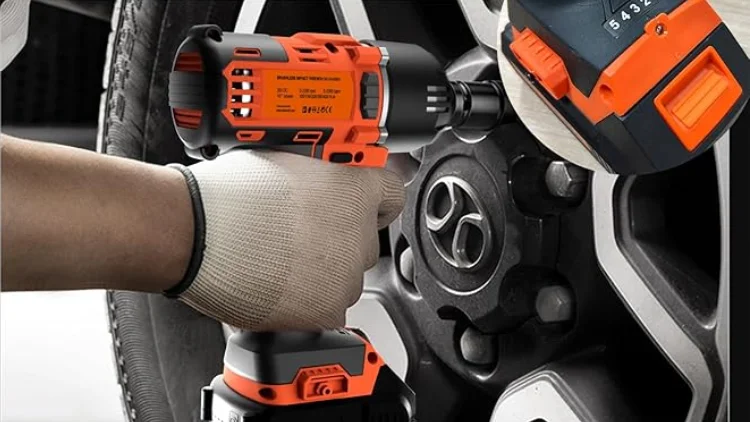
An impact wrench is a power tool that uses a combination of rotational motion and rapid hammering impacts to generate high torque output.
Inside the tool, a small hammer mechanism repeatedly strikes the output shaft, creating sudden bursts of force that loosen even rusted or over-tightened bolts.
This hammering action helps break the friction holding fasteners in place, making the job fast and effortless.
When to Use It
Impact wrenches are ideal for removing bolts or loosening fasteners that are stuck due to rust, corrosion, or overtightening.
They’re widely used in automotive workshops, heavy machinery maintenance, and construction, where speed and force are essential.
For example, changing car tires, assembling large frames, or dismantling equipment all benefit from the high-torque bursts an impact wrench delivers.
Key Advantages
- Delivers instant torque for fast removal.
- Reduces operator fatigue by minimizing manual effort.
- Works well in industrial or high-volume environments.
However, impact wrenches are not meant for precision tightening — their power makes it difficult to control the exact torque value applied.
To understand how impact wrenches work in more detail, check out our full guide:
What Is an Impact Wrench
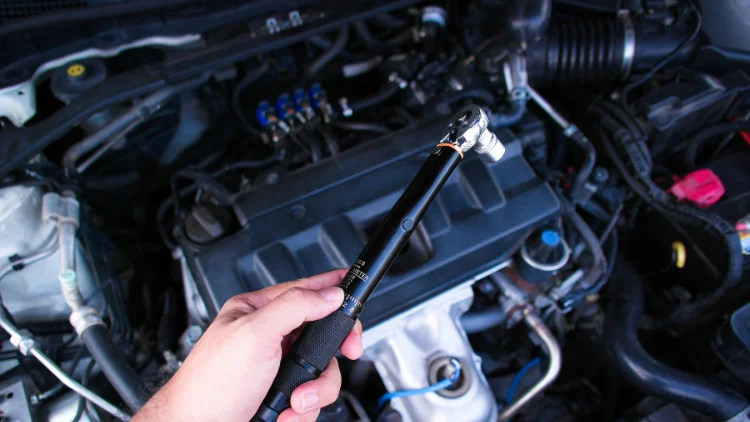
What Is a Torque Wrench
How It Works
A torque wrench is a precision hand tool designed to apply a specific amount of torque to a bolt or nut.
Unlike an impact wrench, it does not rely on hammering or power sources.
Instead, it uses a calibrated internal mechanism that “clicks” or provides feedback when the preset torque value is reached, ensuring accurate tightening.
When to Use It
Torque wrenches are used when precision matters — in applications where over-tightening can cause damage or safety issues.
They’re essential for automotive wheel installation, engine assembly, machinery calibration, and industrial manufacturing.
Anywhere the correct torque value is critical, a torque wrench is the right choice.
Main Benefits
- Ensures consistent tightening accuracy.
- Prevents bolt and thread damage from over-torqueing.
- Promotes equipment safety and longevity.
In short, a torque wrench is about control, not speed. It’s the final step in ensuring everything stays securely fastened.
Core Differences Between Impact Wrench and Torque Wrench
At a glance, these tools might look similar — both use sockets and handle fasteners — but they operate on different principles and are designed for distinct tasks.
| Feature | Impact Wrench | Torque Wrench |
| Power Source | Electric / Pneumatic | Manual / Mechanical |
| Torque Control | No precise control | Adjustable and calibrated |
| Best For | Loosening / High torque tasks | Precise tightening |
| Speed | Fast and powerful | Slower but accurate |
| Risk | May over-tighten | Minimal risk of damage |
The impact wrench wins in speed. It can remove or install multiple bolts in seconds, saving time on repetitive tasks.
The torque wrench, on the other hand, is all about precision — perfect for ensuring each bolt is tightened to manufacturer specifications.
When to Use Each Tool in Real Scenarios
Auto Repair and Tire Service
In tire shops, mechanics often start with an impact wrench to remove lug nuts quickly.
When reinstalling wheels, they switch to a torque wrench to ensure the nuts are tightened to the exact specification — too loose and the wheel could fall off; too tight and the studs might snap.
Machinery Assembly
For industrial or production work, impact wrenches save time on large bolts and assemblies.
Torque wrenches come in for the final pass, ensuring each fastener is torqued precisely for optimal equipment performance.
Construction and Workshop Tasks
When speed is the top priority — like in steel structure assembly or heavy equipment repair — the impact wrench is irreplaceable.
But when you need accuracy, especially for safety-critical connections, the torque wrench is your safeguard.
Can You Use an Impact Wrench as a Torque Wrench?
This is one of the most common questions — and the short answer is no.
An impact wrench can deliver massive torque, but it lacks the precision control required for consistent tightening.
The hammering mechanism creates variable torque depending on the load, friction, and duration of use. That means even experienced users can easily over-torque or damage components.
If your goal is accuracy, a torque wrench is mandatory.
In professional settings, mechanics often use both tools together:
the impact wrench for loosening and pre-tightening, and the torque wrench for final calibration.
Conclusion
Both tools have distinct strengths and complement each other perfectly.The impact wrench is built for power, speed, and efficiency — perfect for quick removals and tough bolts.The torque wrench provides the precision and control needed to finish the job correctly.
Explore KAFUWELL, your trusted source for professional impact wrenches engineered for durability, precision, and pure torque efficiency.
FAQ
Can I Use an Impact Wrench to Tighten Lug Nuts to Specification?
While an impact wrench is excellent at loosening or initially tightening lug nuts because of its high torque output, it is not recommended as the sole tool for final tightening to specification. Impact wrenches lack the precision control required to ensure exact torque values, which is why many professionals finish with a torque wrench.
What Happens if I Use a Torque Wrench to Loosen a Bolt?
A torque wrench is designed primarily for tightening to a specified torque, and while it may physically loosen bolts, using it routinely for that purpose can affect its calibration and reduce accuracy over time. It’s generally better to use a breaker bar or impact wrench for loosening, then switch to the torque wrench for final tightening.
Do I Need Both an Impact Wrench and a Torque Wrench in My Toolbox?
Yes — if you work on a variety of tasks where both speed/force and precision matter, having both tools is a smart strategy. Many mechanics use an impact wrench for rapid removal or assembly and a torque wrench for the final precision tightening. Choosing one alone may limit flexibility or effectiveness.
How Often Should a Torque Wrench Be Calibrated?
For professional use, a torque wrench should typically be calibrated every 6–12 months (or after a certain number of uses) to ensure accuracy. Using it beyond recommended intervals can lead to inaccurate torque application and increased risk of fastener failure.
Are There Any Safety Risks When Using Impact Wrenches or Torque Wrenches?
Yes. With impact wrenches, using the wrong socket (e.g., standard chrome instead of impact-rated) or ignoring follow-up tightening can cause fastener damage or injury. With torque wrenches, overtightening or under-tightening due to mis-calibration may lead to component failure. Always use the correct accessories, follow manufacturer specifications, and maintain your tools.