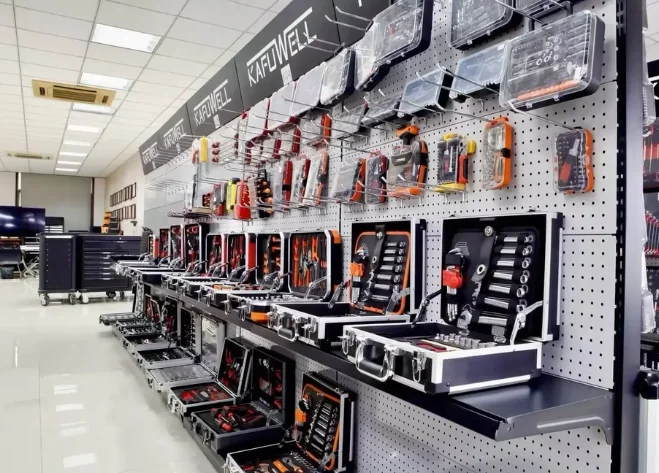
Wholesale purchasing is a key strategy for distributors and retailers to reduce costs, maintain stable inventory, and rapidly expand their product lines.
In simple terms, wholesale procurement means purchasing large quantities of products directly from manufacturers or authorized suppliers to obtain better pricing and higher profit margins.
Successful dealers often adopt wholesale cooperation because it brings clear business advantages:
- Lower costs: Access to more competitive prices through bulk purchasing.
- Stable supply: Ensures consistent inventory and delivery schedules.
- Scalable growth: Facilitates expansion into new markets and channels quickly.
However, wholesale procurement is not merely a buying process — it requires strategic thinking, judgment, and long-term planning.
Below is a comprehensive guide for distributors and retailers on how to source tools effectively.
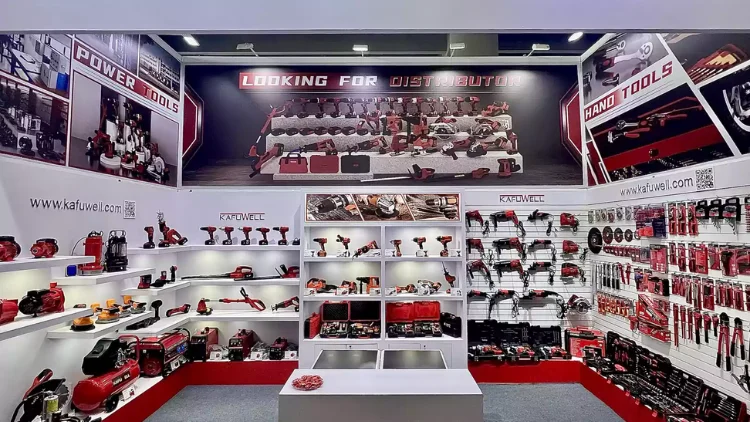
1. Understanding the Global Tool Wholesale Market
Before purchasing, it’s essential to understand the structure and supply chain of the global tool industry.
1.1 Global Market Overview
The tool manufacturing industry is one of the most mature industrial sectors worldwide, with major production hubs in China, Germany, Japan, and the United States.
Among these, China has become the world’s leading exporter of power tools, hand tools, and tool sets, thanks to its complete supply chain, flexible OEM/ODM capabilities, and highly competitive pricing.
1.2 Types of Suppliers
| Type | Features | Best For |
| Manufacturers / Factories | Have independent design and production capabilities; can offer OEM/ODM customization. | Ideal for distributors seeking long-term cooperation and private label branding. |
| Distributors / Wholesalers | Purchase from factories and resell to retailers; lower minimum order quantity (MOQ) but slightly higher prices. | Suitable for small to medium-sized retailers. |
| Trading Companies | Integrate resources from multiple factories; offer a wide variety of products but with less quality control. | Suitable for buyers looking for multiple product categories. |
1.3 Industry Trends
- Rapid growth of OEM / ODM private label collaborations.
- The rise of cross-border e-commerce and online procurement channels.
- Increasing global demand for branded and customized tool solutions.
2. Five Key Steps in Tool Wholesale Procurement
Step 1. Define Your Product Line and Target Market
Start by clarifying what type of products and customers you’re targeting.
- Power tools: For construction, repair, and industrial users.
- Hand tools: For home improvement, repair, and DIY users.
- Tool sets & accessories: For retail sets, gift markets, or e-commerce platforms.
Match your product combinations and price levels to your market positioning (industrial, DIY, construction, etc.).
Step 2. Find Reliable Suppliers
Finding the right supplier is the first and most critical step toward success.
Effective sourcing methods:
- Visit manufacturer websites and review their catalogs and certifications.
- Attend major trade shows (e.g. Canton Fair) to meet factories in person.
- Use reputable B2B platforms (e.g. Alibaba, Made-in-China) to find exporters with proven experience.
Verify key credentials:
ISO 9001, CE, ROHS, BSCI, or other relevant compliance certifications.
Supplier evaluation criteria:
- Sample quality and consistency
- Response speed and communication clarity
- MOQ and lead time
- Export experience and client reputation
Step 3. Compare Prices and Minimum Order Quantities (MOQ)
Wholesale prices depend on order size and customization level.
- Factory prices are the lowest but require higher MOQ.
- Distributors offer smaller MOQs with slightly higher prices.
- The key is balancing MOQ with your inventory capacity.
For new markets, start with smaller, more flexible orders to minimize risk.
Step 4. Conduct Sample Testing and Product Verification
Never skip the sample testing stage — it’s crucial for quality assurance.
Testing focus areas:
- Ergonomics and handling comfort
- Material quality, torque, battery life, and durability (especially for power tools)
- Packaging strength, labeling accuracy, and instruction manual details
Only after passing the sample evaluation should bulk production proceed.
Step 5. Negotiate Business Terms and Build Long-Term Cooperation
Once samples are approved, negotiate the commercial terms:
- Delivery schedule and payment terms (e.g. 30/70, L/C)
- Customization details (color, logo, packaging, etc.)
- Warranty and after-sales service policies
Long-term partnership advantages:
- Better pricing
- Priority production scheduling
- Joint marketing or technical support from the manufacturer
3. Key Supplier Evaluation Criteria
| Evaluation Dimension | Key Considerations |
| Production Capacity | Can the supplier meet your order volume consistently? |
| OEM/ODM Capability | Do they support brand customization and packaging design? |
| Certification & Compliance | Do they meet export country standards (CE, ROHS, etc.)? |
| Communication & Service | Are their responses fast and quotations transparent? |
4. Advantages of Working Directly with Manufacturers
Partnering directly with manufacturers instead of intermediaries provides clear advantages:
- Lower costs: Eliminates middleman markups.
- Flexible customization: Rapid design adjustments based on market feedback.
- Efficient communication: Direct coordination from R&D to production.
- Quality control: Every process is traceable and measurable.
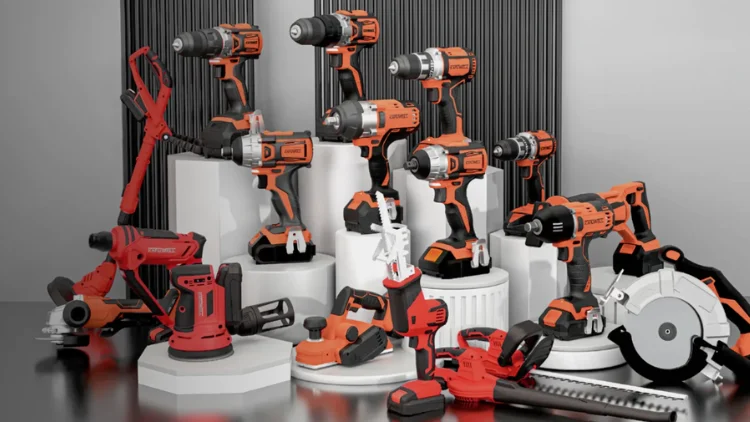
Kafuwell integrates R&D, manufacturing, and export capabilities to provide global brand agents and distribution partners with a full range of tool products and OEM/ODM customization solutions.
We offer flexible order policies — starting from just one carton, with mixed products allowed — making it easy for our partners to test markets, build distribution channels, and expand globally together.
5. Conclusion: Partnership, Not Just a Transaction
Success in wholesale procurement doesn’t come from finding the lowest price — it comes from finding a trustworthy partner for long-term growth.
Only supply chains built on quality, trust, and transparency can help your brand stand out in a competitive market.