The power tool market is huge in scale and keeps growing. As a result, many people choose to become distributors of power tools. However, how to select suitable products to meet the market demand has always been a major problem faced by distributors.
This article will assist distributors in analyzing how to choose power tools according to market demand, ensuring that your business remains competitive.
Factors for Distributors to Choose Power Tools
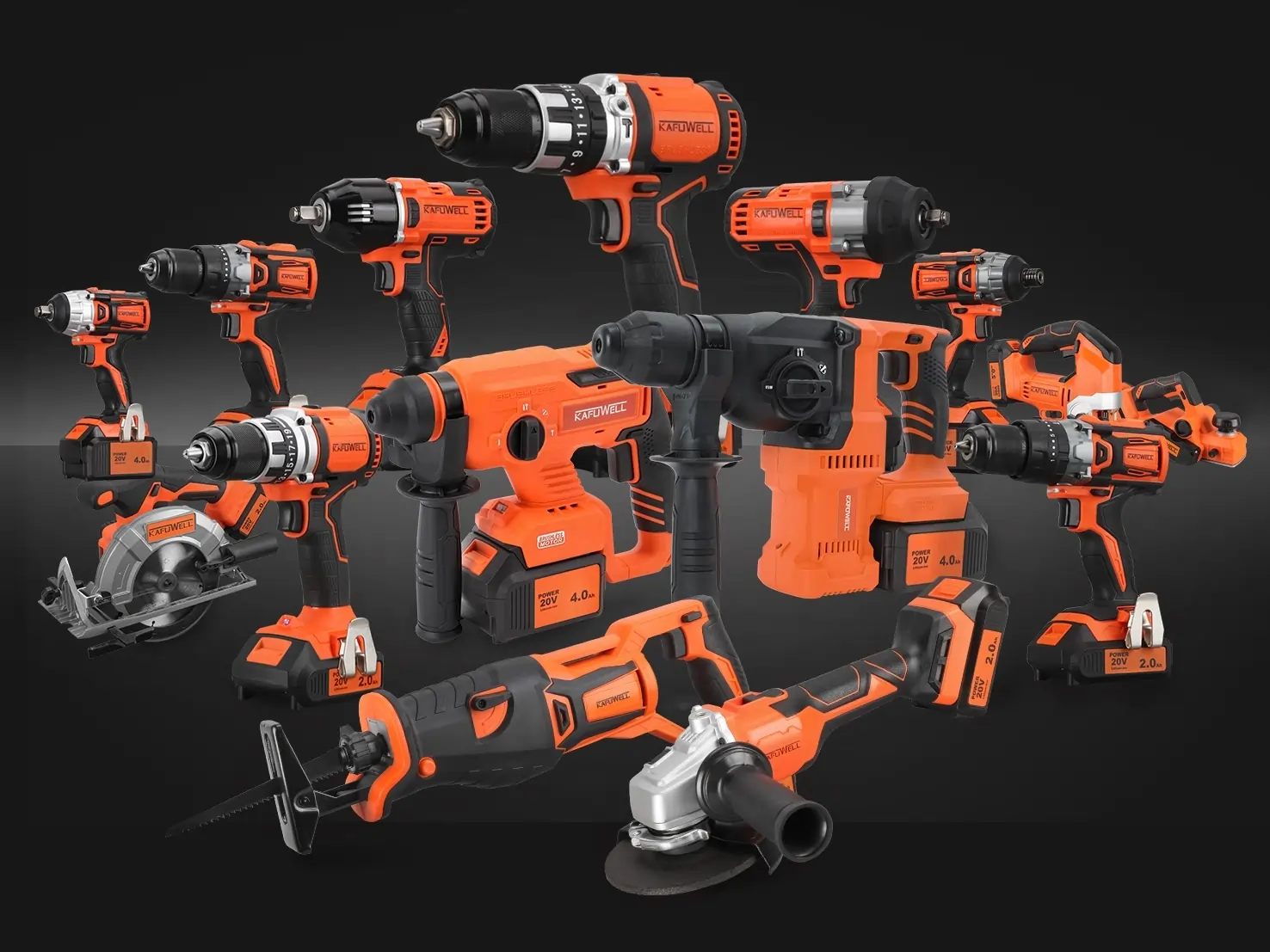
While specific preferences may vary by region and demographic, there are some general trends that dealers should consider when selecting products:
Price
On the premise of ensuring quality, both you and your customers hope to obtain power tools at a lower price, and it is entirely possible to achieve this goal. You can look for power tool suppliers that meet ISO or ANSI standards.
For example, tool manufacturers in China, due to its complete industrial chain and labor cost advantages, etc., you can obtain high-quality tools here at a lower price. Offering customers cost-effective options will become an important breakthrough point in your sales strategy.
Tool Features and Functions
Consumers’ expectations for tools go beyond basic functions. More and more people are looking for tools with enhanced features. From ergonomic designs to longer battery life, customers want tools that are more efficient and convenient. Features like quick-change mechanisms, adjustable speed controls, and safety functions (like automatic shut-off) make tools more appealing to potential buyers.
Brand
Some consumers tend to trust well-known brands such as Bosch and Makita. However, an increasing number of customers are also starting to pay attention to emerging brands like Kafuwell. These brands often offer products with more competitive prices.
Therefore, in addition to selling mainstream brands, you can also consider introducing emerging brands that meet the needs of price-sensitive customers. Providing more options for the diverse needs of different customers will help you expand your customer base.
Read more: What Is the Best Power Tool Brand
Understanding Market Trends
As a distributor, you should select suitable products based on the region of the market and the target customer group. For example, in the US market, due to the high labor costs and the fact that 65% of households have their own yards and garages, the DIY culture is quite popular. People tend to do things by themselves. Therefore, you can choose tools that are lightweight and easy to operate (such as cordless drills, small electric saws, etc.), which will be more attractive.
In emerging markets such as Southeast Asia, the Middle East, and Latin America, where there is a strong focus on infrastructure construction, labor costs are relatively low in some areas, and the demand for household DIY is weak. You can focus on professional-grade power tools, such as cutting tools suitable for construction like circular saws, reciprocating saws, and hammer drills (for example, used in concrete and metal processing), as well as heavy-duty equipment like demolition hammers and concrete vibrators.
Which Power Tools Have High Demand
If you are unfamiliar with the market, you can choose several types of tools with the highest sales volume. According to the market data from Statista, the following types of tools have the most rapid demand growth in 2025:
- Cordless drills: Due to their convenience and versatility, the demand for cordless drills has increased significantly. It is expected that the cordless drill market will grow by 7% in 2025, making it one of the most popular power tools.
- Impact wrenches: They are suitable for the heavy industry and construction industry, and the demand is steadily increasing. The annual sales of the impact wrench market are expected to exceed 1.5 billion US dollars in 2025.
- Circular saws: They still dominate the construction industry, especially those tools that can provide high-precision cutting. It is expected that the market demand for circular saws in the construction industry will grow by 6% by 2025.

Conclusion
The demand for power tools is constantly evolving. If you want to wholesale high-quality power tools at favorable prices to achieve business breakthroughs, you can contact us.
Kafuwell offers more than 4,000 SKUs and has a wide variety of in-stock products, which can meet the needs of everyone from DIY enthusiasts to professionals. We can also provide customized solutions according to your specific requirements.
FAQ
What is the demand for power tools?
The global demand for power tools is steadily increasing, with the market expected to grow at a compound annual growth rate (CAGR) of 6.0% from 2024 to 2034. Key drivers include:
- Infrastructure Growth: The increase in construction and infrastructure projects is driving the demand for professional-grade tools.
- DIY and Home Renovation: More homeowners are taking on renovation projects themselves, which is boosting the demand for power tools.
- Industry Efficiency Demand: As the manufacturing industry moves toward automation and higher efficiency, the demand for advanced power tools continues to rise.
How to start sourcing from Kafuwell?
You can visit our official website and submit a partnership application form on the “Partner with Kafuwell” page (https://www.kafuwell.co.za/partner-with-kafuwell/), providing your company information and partnership intentions. Our team will get in touch with you shortly to discuss the details of the cooperation.
You can also reach us by phone at +86 15958121398 or via email at service@ok-tools.cn.
We offer partners detailed distribution policies, market support, and technical training to ensure success in your local market. We look forward to working with you and expanding the market together!
Additionally, we provide OEM services to customize power tools according to your specific requirements.
Why Is Manufacturing in China Cheaper?
Labor costs are relatively low in China. Additionally, China has a vast production capacity and advanced infrastructure, enabling large-scale manufacturing, which helps reduce product costs through economies of scale.
Moreover, China’s efficient supply chain network and well-developed logistics system also contribute to lowering the costs of raw material procurement and transportation.