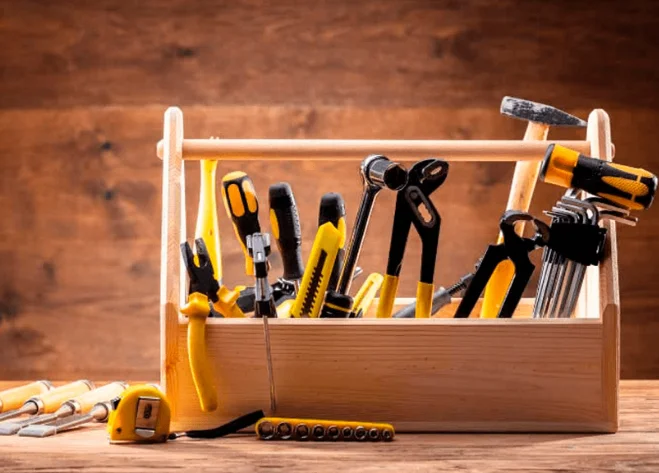
If you’re a DIY enthusiast or professional, your garage or workshop is likely filled with all kinds of power tools—from drills to saws to sanders. But have you ever considered how much electricity these tools actually use?
Power Tools and Their Energy Consumption
We all know that power tools can make work easier, but they can also put a significant strain on your electricity usage. That’s why understanding the energy consumption of your power tools is important, especially when you’re using multiple tools in your garage or workshop. Each power tool’s energy consumption is closely tied to its rated power, typically measured in watts (W). The higher the power, the greater the tool’s electricity demand.
To better understand the energy consumption of power tools, it’s important to grasp a few basic electrical concepts:
- Amps (A): This measures the amount of electrical current flowing through the tool.
- Volts (V): Voltage is the pressure from the power source that pushes the current through the tool.
- Watts (W): Watts are the product of amps and volts, representing the actual power consumed by the tool.
For example, a power circular saw with a rated power of 1,200 watts will draw a certain amount of current depending on its voltage. If you use this tool for 1 hour, it will consume 1.2 kilowatt-hours (kWh) of electricity. You can estimate the energy consumption of your power tools using the following formula:
- Watts × Hours of Use = Watt-hours (Wh) / 1,000 = Kilowatt-hours (kWh)
You can multiply the kilowatt-hours by your local electricity rate. For example, if your electricity rate is $0.12 per kilowatt-hour, the cost to run a circular saw for one hour would be $0.12 x 1.2 kWh = $0.144, or about 14 cents.
While the operating cost of a single tool might seem low, when you’re running multiple tools at the same time or using them for extended periods, the costs can quickly add up.
Practical Tips to Reduce Power Consumption
If you’re concerned about your power tools using too much energy, don’t worry—there are some simple ways to reduce their energy consumption without affecting performance. Here are a few tips to help you save power and lower your electricity bills:
Use Energy-Efficient Tools
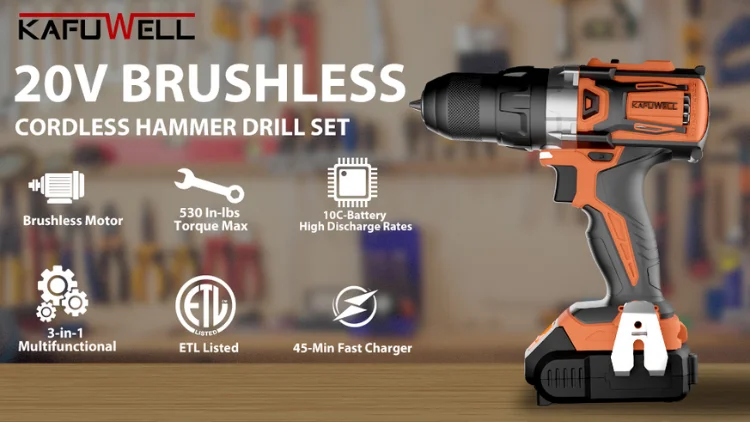
Many modern power tools are designed to be more energy-efficient, equipped with lower-power motors and systems that still deliver high performance. When purchasing new tools, look for ones that feature energy-saving technologies, such as brushless motors. These tools reduce energy waste and extend battery life, making them a more efficient choice.
Limit Idle Time
One easy way to save power is by minimizing the idle time of your power tools. For example, when adjusting workpieces, don’t leave your sander running continuously. Turn it off when you’re not actively using it. By cutting down on unnecessary run time, you not only save power but also help extend the tool’s lifespan.
Optimize Tool Settings
Many power tools offer adjustable speed settings. Choosing the right speed can help save power while boosting efficiency. For example, when doing fine work or making adjustments, opt for the lowest speed setting. This way, the tool will operate at a lower power consumption while still getting the job done.
Keep Tools in Good Condition
Well-maintained tools consume less power. Regularly clean and lubricate your tools to reduce friction, improve performance, and extend their lifespan. A properly maintained tool will run more efficiently, which directly reduces its power demand.
Cordless vs. Corded Tools: Which is More Energy-Efficient?
In recent years, cordless power tools have become increasingly popular due to their convenience and portability. But are they really more energy-efficient than corded power tools?
Cordless Power Tools
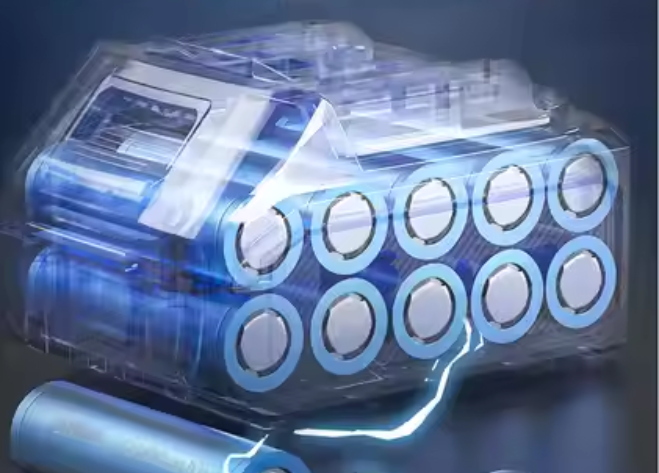
Cordless power tools typically run on lithium-ion batteries, which are more efficient than older battery types. However, tools powered by higher-voltage batteries (like 18V or 20V) usually require more energy to charge. On the plus side, they often last longer between charges.
Since cordless power tools rely on battery power, there’s energy loss during both charging and discharging, and over time, the battery’s efficiency decreases as it ages.
Corded Power Tools
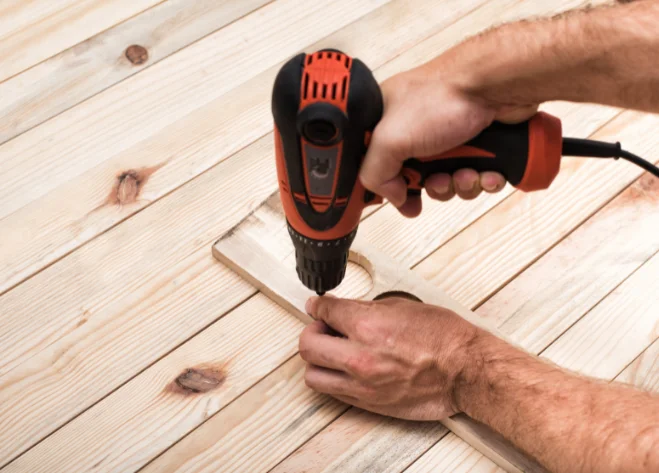
Corded power tools, on the other hand, draw power directly from an outlet, providing a steady, continuous supply of electricity without the need for batteries. This means no energy loss from charging or replacing batteries. For tasks that require long, uninterrupted use, this setup may be more efficient.
Which is More Energy-Efficient?
Overall, corded power tools tend to be more energy-efficient in the long run, especially for tasks that require steady power, such as large-scale projects. If your work requires greater mobility and you’re tackling smaller tasks, cordless power tools may be the better choice.
How to Manage Power Usage
Managing power usage isn’t just about monitoring the energy consumption of your tools; it’s also about ensuring that your workshop’s electrical system can handle the load. Here’s what you need to know.
Understand the Limits of Your Electrical Panel and Circuits
Most homes have electrical panels with a capacity between 100 and 200 amps, while electrical panels in construction sites or factories are typically 400 amps or higher. These panels are designed to handle the total power load of all your appliances and devices. However, each circuit (which powers a specific appliance or tool) has its own rated current limit, commonly 15 amps, 20 amps, or 30 amps.
When using power tools, it’s important to focus on the capacity of each individual circuit, not just the overall panel capacity. For example, a 15-amp circuit might be sufficient to power small tools, but running several medium or heavy-duty tools at once could exceed the circuit’s limit.
Calculate the Current Demand of Your Tools
To avoid overloading a circuit, you need to calculate the total current demand of all the tools you’re using. For example:
- Table Saw: 15 amps
- Circular Saw: 15 amps
- Drill: 5 amps
If you’re running all three of these tools at the same time, their combined current demand would be 35 amps. If your circuit’s capacity is 50 amps, you’re already close to the limit. As a safety rule, it’s recommended that the total current demand of your tools should not exceed 80% of the circuit’s capacity. In this case, that’s 40 amps, to avoid tripping the breaker or causing electrical issues.
Use Higher Voltage to Reduce Current Demand
For the same power requirement, higher voltage reduces the current needed. For example:
- Using 240V power for a 1000W tool would require 4.17 amps (1000 ÷ 240).
- Using 120V power for the same tool would require 8.33 amps (1000 ÷ 120).
Switching to a 240V circuit can significantly reduce the current demand, easing the load on the circuit, especially for high-power tools. It’s important to note that not all tools are compatible with 240V power.
You can check the user manual or the tool’s nameplate to determine the voltage it supports, or you can look at the type of plug and socket, as they vary for different voltage systems. For instance, in systems with different voltages, plugs and sockets are also different.
- 120V outlets typically use two- or three-prong flat plugs (common in the U.S. and Canada).
- 240V outlets usually require three-prong round plugs or plugs with different shapes (common in Europe, Australia, etc.)
Set Up Dedicated Circuits for Heavy-Duty Tools
If your workshop includes heavy-duty tools like a table saw or air compressor, it’s essential to set up dedicated circuits for these tools. These machines often require a lot of power, and sharing a circuit with other devices can easily overload the system, potentially causing the breaker to trip or even leading to an electrical fire.
When setting up dedicated circuits, consider the following:
- Dedicated Breakers: Ensure that the breaker’s capacity matches the power requirements of your tool.
- Separate Wiring: Run individual wires for each tool, avoiding sharing circuits with other devices.
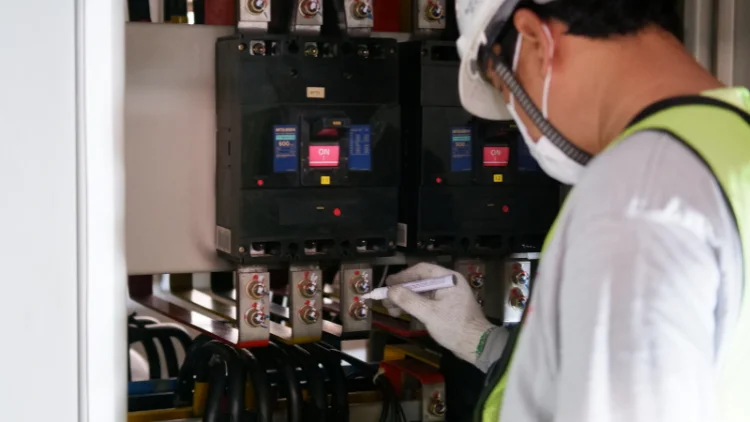
- Professional Assessment: If you’re unsure whether you need a dedicated circuit, consult a licensed electrician to evaluate your electrical system and install the necessary infrastructure.
How to Avoid Circuit Overload
The key to avoiding circuit overload is careful planning and distribution of power usage:
- Don’t run multiple high-power tools on the same circuit at the same time.
- Regularly check your electrical panel and wiring to ensure they’re in good condition.
- If you need to run several tools at once, consider upgrading your electrical system or adding additional circuits to handle the load.
Conclusion
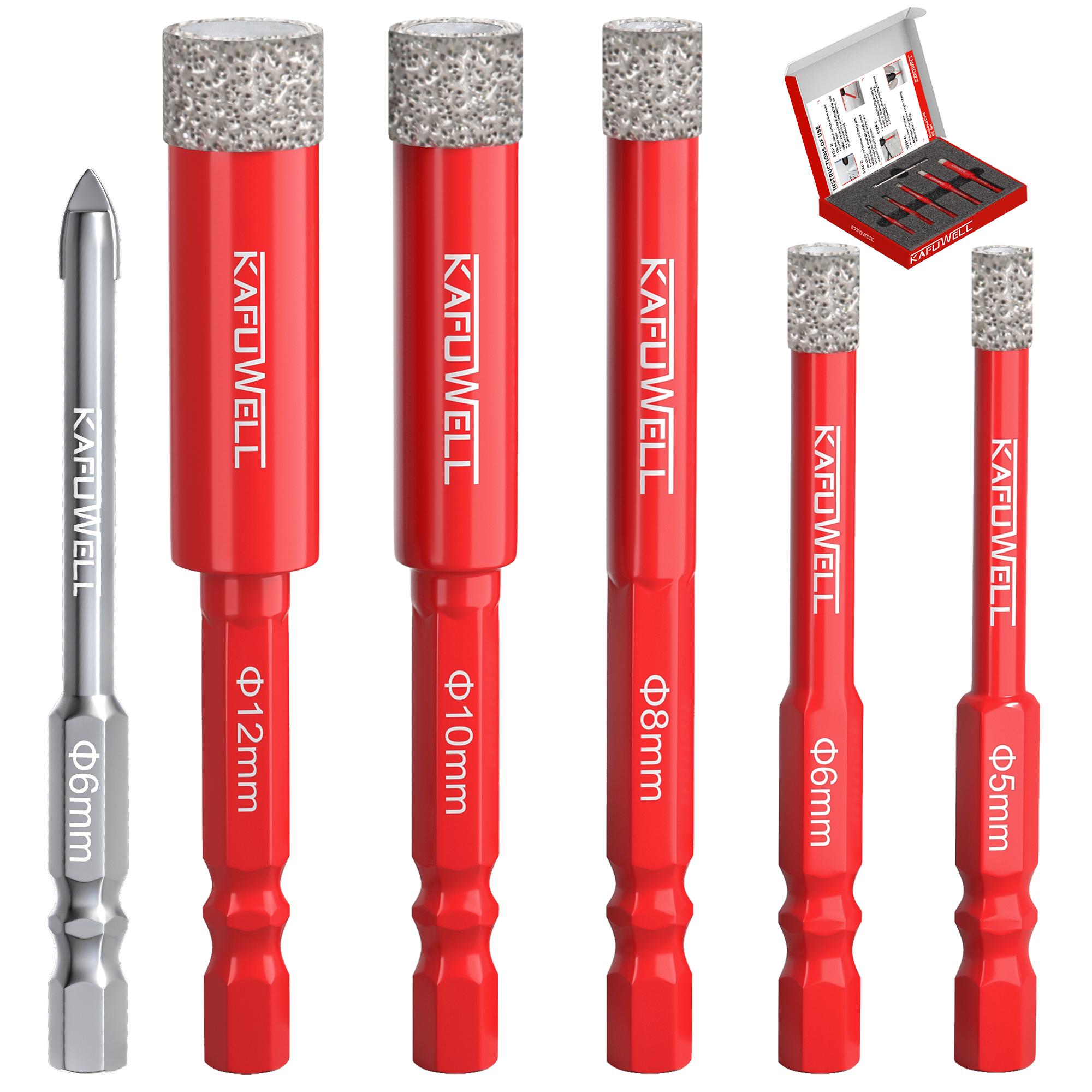
At Kafuwell, we offer a range of high-quality, energy-efficient power tools, including both corded and cordless options. These tools combine powerful performance with high efficiency, helping you get the job done with less energy consumption. Plus, our products are priced competitively, allowing you to enjoy top performance while saving on costs. Explore our product lineup today and make your next project more efficient and cost-effective!