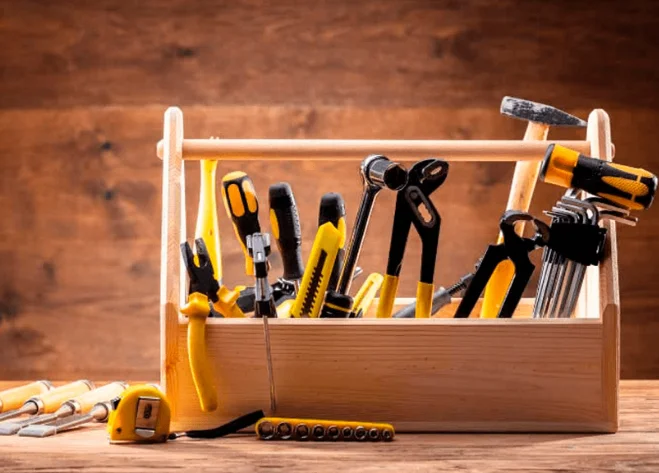
Pliers are one of the most common hand tools, widely used in various tasks. As the needs have evolved, the functions of pliers have expanded beyond simple gripping and crimping, leading to a variety of specialized types. Today, we will introduce 15 common types of pliers to help you choose the right tool for your needs.
Basic Components of Pliers
Understanding the basic structure of pliers is essential for proper use. Pliers typically consist of the following parts:
- Handles: The part you grip, usually made from non-slip materials such as rubber or silicone, ensuring comfort and safety during use.
- Jaws: The part used for gripping, tightening, or cutting objects. Common jaw designs include serrated or smooth surfaces.
- Pivot/Joint: The hinge connecting the jaws and handles, allowing the jaws to open and close.
- Teeth: The surface of the jaws, which provide extra grip and prevent slipping.
- Cutting Edge: Some pliers have a specialized cutting edge for cutting wires and other materials.
Needle Nose Pliers
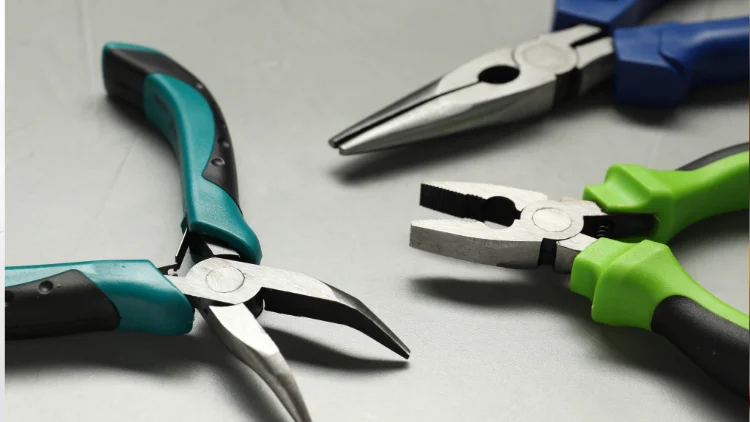
Needle nose pliers are known for their long, slender jaws and relatively short handles. These pliers are commonly used by electricians to work in tight spaces and are ideal for gripping small nuts, wires, or washers. They are especially useful for electrical work and fine assembly tasks.
Locking Pliers
These pliers have an adjustable jaw and a locking mechanism that locks the jaw when gripping an object, freeing up both hands for other tasks. The handle is equipped with an adjustment knob, and the jaws are commonly available in flat or serrated surfaces to suit different work requirements.
It is particularly suitable for work that requires longer periods of gripping, such as removing fasteners or clamping pipes, and can maintain a stable pressure.
Crimping Pliers
For electrical work, crimping is a common need. Crimping pliers are specifically designed to meet this demand, typically featuring longer handles to provide more leverage. The jaws have multiple grooves or molds to accommodate various sizes of electrical terminals and wire gauges. To use, select the appropriate mold, insert the wire into the terminal, place it in the corresponding groove, and squeeze the handles to tightly crimp the terminal onto the wire.
If more crimping force is required, especially for larger cable terminals, hydraulic crimping pliers provide greater power and precision, making them ideal for heavy-duty and professional applications.
Circlip Pliers
Circlip pliers are quite common in automotive repair and mechanical maintenance. They are mainly used for installing and removing circlips. The jaws of circlip pliers are slender and pointed, and there are small metal pins at both ends of the jaws, which can be inserted into the holes of circlips.
Water Pump Pliers
Water pump pliers (also called channel lock pliers) have long handles that provide significant leverage. The jaws are adjustable, typically offering multiple positions to accommodate different pipe diameters. The serrated jaw surface increases friction, making it ideal for gripping and rotating pipes. These pliers are primarily used for tightening or loosening pipe fittings during plumbing installation or repair and can also be used for gripping round or irregularly shaped objects.
Combination Pliers
Combination pliers are designed for tasks that require both gripping and cutting. They feature serrated jaws for gripping nuts and nails, as well as a cutting edge for snipping wires and small objects. These versatile pliers are widely used for general repair work, wire cutting, and light-duty tasks.
Flat Nose Pliers
Flat nose pliers have wide, flat jaws with short tips. They are commonly used in jewelry making or fine metalworking. These pliers are ideal for gripping and bending metal wires and can easily reach into tight spaces, making them perfect for precision manual work.
Diagonal Pliers
Diagonal pliers have jaws that are angled, and their blades are flat. They are capable of performing cutting tasks such as cutting wires, cables, or metal wires along a straight edge. They are commonly used tools for electricians and DIY enthusiasts.
Bent Nose Pliers
Bent nose pliers are similar to needle nose pliers, but with curved jaws, allowing them to reach into tight or angled spaces. These pliers enable precise bending and cutting without obstructing hand movements, making them perfect for delicate tasks.
Round Nose Pliers
Round nose pliers have smooth, rounded jaws that do not damage the material’s surface, making them ideal for jewelry making and metalworking. They are not suitable for gripping or cutting but are excellent for shaping metal wire into circular or curved forms.
Wire Strippers
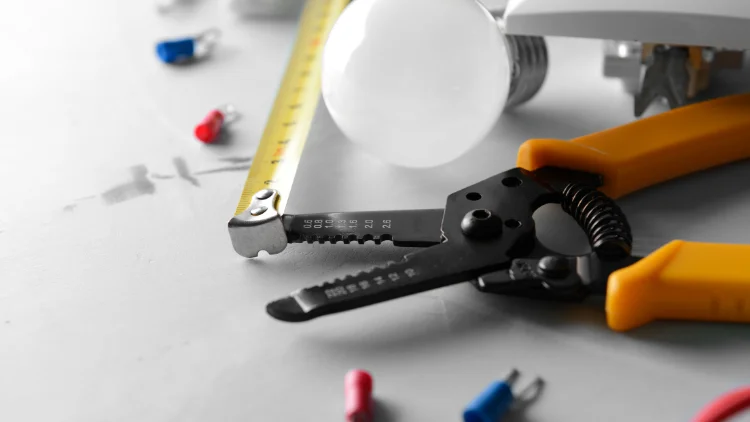
Wire strippers are equipped with cutting blades and precise gauges for stripping the insulation from wires. They are commonly used by electricians for cutting and stripping wires to ensure accurate electrical connections.
Multi-function pliers
As the demand for the versatility of pliers continues to grow, pliers that combine more functions have emerged, collectively referred to as multi-function pliers. Multi-function pliers have a variety of jaw designs, including common types such as combination pliers, pointed nose pliers, and diagonal cutting pliers.
Different from traditional pliers, there are precisely scaled wire stripping grooves equipped behind the pivot/pivot point. It integrates various functions including cutting, wire stripping, and crimping.
Conclusion
Whether for professional work or everyday repairs, pliers are indispensable tools. By understanding the characteristics and uses of each type, you can select the most appropriate tool for your specific task, ensuring greater efficiency and precision in your work. From electrical work to plumbing installations, the versatility and adaptability of pliers make them capable of handling a wide range of challenges.