When you’re looking to buy a new drill, product pages often list both an Impact Drill and a regular Drill. They look similar and share comparable specifications, which makes it hard for many buyers to tell them apart.
To help you make a clearer decision, this article explains their internal structure, suitable materials, and common use cases so you can quickly choose the right tool for your projects.
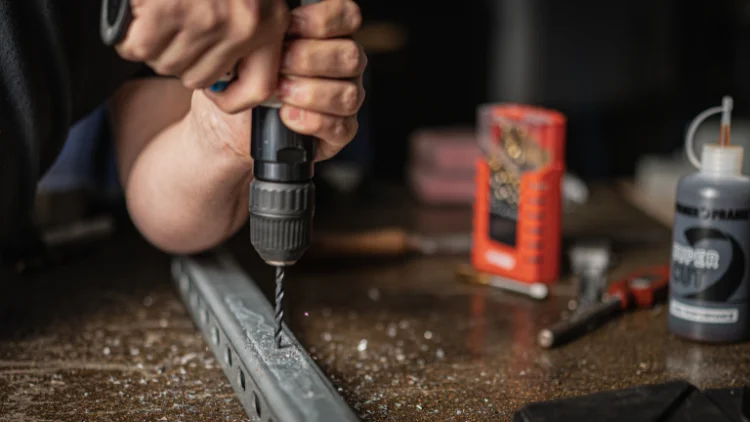
What Is a Drill?
Basic Structure and Working Principle
A standard Drill has a relatively simple mechanism:
- A motor drives the chuck to rotate
- Variable-speed trigger controls the RPM
- A three-jaw keyless chuck holds different round-shank or hex-shank bits
- Most models include a clutch to limit torque and prevent stripping
All of its power is delivered through pure rotation, with no impact motion
What Is It Best At?
A Drill excels at versatility and fine control. It’s ideal for:
- Drilling pilot holes in wood or drywall
- Making small holes in thin metal sheets
- Furniture assembly, curtain rod installation, hanging frames
- Small DIY tasks such as building wooden boxes or shelves
Thanks to the clutch, you can set just enough torque to seat screws cleanly without damaging the material
Advantages and Limitations
Advantages:
- Lightweight and compact, easy to hold for long periods
- Adjustable torque for precise, controlled work
- Works with many types of drill bits and driver bits
Limitations:
- Typically offers only moderate torque (tens of N·m)
- Struggles with long screws, large hole saws, or hardwood
- Lacks impact action, making it ineffective for concrete or masonry
If your tasks are mostly wood, thin metal, or indoor home projects, a regular Drill covers almost everything you need
What Is an Impact Drill?
Impact Mechanism and Working Method
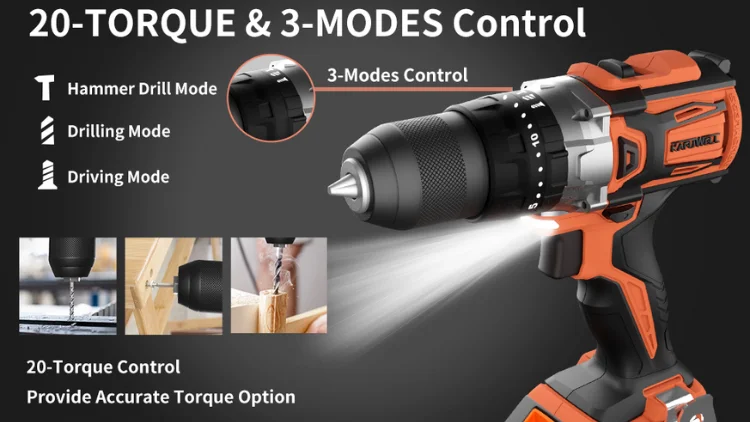
An Impact Drill is a drill equipped with a hammering function—often referred to as a Hammer Drill.
It builds upon the standard Drill by adding an impact mechanism:
- When switched to hammer mode, internal cams or toothed discs collide rapidly
- This creates high-frequency, small-range forward impacts along the drill axis
- The drill bit rotates while simultaneously “tapping” to chip away concrete or brick
- Turn off impact mode, and it operates just like a standard Drill
What Is It Best At?
Impact Drills excel in heavier-duty scenarios:
- Efficient drilling in concrete, brick, and masonry
- Drilling large holes in hardwood
- Driving bigger fasteners with less stalling
- Often provide higher torque (e.g., 100–150 N·m)
With the right bit, it handles both wood and masonry. When needed, just activate the impact function.
Advantages and Limitations
Advantages:
- Multi-purpose: works like a Drill, plus drills into concrete
- Higher torque for heavy workloads
- Provides more capability for future demanding tasks
Limitations:
- Heavier and bulkier than a regular Drill
- Hammer mode produces strong vibration and loud noise
- For light home projects, the impact function may feel excessive
Key Differences: Impact Drill vs Drill
1. Torque and Power
Regular Drill:Typically 30–50 N·m, suitable for light to medium tasks.
Impact Drill:100–150 N·m or more, better for large holes and tough materials.
Higher torque maintains speed in hard materials but requires a firm two-hand grip.
2. Impact Function and Suitable Materials
Regular Drill:Wood, metal, plastic, drywall.
Impact Drill:
- Impact Off: functions like a regular Drill
- Impact On: designed for concrete, brick, stone
Simple rule: if concrete or masonry is involved, the Impact Drill wins.
3. Weight, Handling, and Control
Regular Drill:Lighter, slimmer, screwdriver-like feel; great for long sessions.
Impact Drill:Heavier due to impact mechanism, often includes a side handle for stability.
For driving hundreds of small screws, a Drill feels easier. For occasional heavy-duty holes, the heavier Impact Drill is fine.
4. Cost and Durability
Under the same brand and voltage, an Impact Drill usually costs more, but the gap is much smaller today.
If you’re budget-conscious but foresee occasional concrete work, many users choose an Impact Drill as a “future-proof” one-tool solution.
Common Scenarios: Which One Should You Choose?
Home DIY and Furniture Assembly
Examples:
- Assembling wardrobes, shelves, TV cabinets
- Installing curtain rods, hanging frames, small wall fixtures
- Drilling pilot holes or driving small screws in wood/drywall
These tasks require precision, not brute force.
Winner: Regular Drill — lighter, better clutch control, easier to handle.
Recommendation:If 80% of your work falls into this category, choose a Drill.
Woodworking and Metalworking
Examples:
- Larger holes in studs or beams (cables, conduits)
- Making openings in tables or doors
- Drilling installation holes in steel or metal profiles
This work needs moderate torque and accuracy.
- For small, occasional holes: a Drill is fine
- For frequent use of large spade bits, auger bits, hole saws, or metal bits:
Impact Drill (with impact off) delivers more torque and is less likely to bog down
Recommendation:If you do wood or metal work regularly and may occasionally drill masonry, choose an Impact Drill.
Drilling Concrete and Brick
Examples:
- Mounting shelves, TV brackets, or wall anchors on brick
- Drilling expansion bolt holes in concrete ceilings or floors
- Installing railings or awnings outdoors
This is the biggest difference:
- Drill: can force its way through, but it is painfully slow and damages bits/motor
- Impact Drill: with masonry bit and hammer mode, drills anchor holes in seconds
Recommendation:If your plan includes any concrete, brick, or exterior walls, an Impact Drill is essentially required.
Do You Really Need Both?
Use this simple approach:
1. Identify Your Main Work
- Mostly wood, metal sheets, home interior: Drill
- Frequent concrete or hard brick drilling: Impact Drill
2. Evaluate Frequency
- Rare masonry drilling (1–2 times): rent an Impact Drill, keep a Drill for daily work
- Multiple masonry tasks per year: buy an Impact Drill
3. Budget and Tool Planning
- Limited budget, want one tool: choose a drill with impact function, use it as a Drill most of the time
- Higher budget and frequent use: the best long-term combo is one lightweight Drill + one high-torque Impact Drill
Summary
A regular Drill is lighter, easier to handle, and great for home projects, woodwork, and light metalwork.
An Impact Drill builds on those abilities with added hammering power, enabling concrete drilling and heavier-duty tasks.
Choosing between them depends on your materials, workload, and how often you need to tackle tougher jobs.