In today’s rapidly evolving global manufacturing landscape, distributors face a critical decision when building their supply chains: whether to partner under an OEM, ODM, or CM model. The right choice not only determines how smoothly a product reaches the market but also has long-term implications for brand competitiveness.
It’s easy to be swayed by attractive pricing or short lead times at the start of a project, but overlooking the fundamental differences between these models can disrupt growth down the road. Understanding how each model works is the first step toward making an informed, strategic choice.
1. OEM (Original Equipment Manufacturer)
Under the OEM model, the brand owner develops the product design, specifications, and testing requirements. The factory’s role is to execute manufacturing strictly according to these technical documents. In other words, the distributor controls the blueprint, while the OEM handles production.
Advantages:
- High level of control: The brand defines the look, function, and performance standards, ensuring product differentiation.
- Intellectual property protection: Since R&D and design are owned by the brand, patents and proprietary features are easier to safeguard.
- Stable quality: Established OEMs often work with international standards such as AQL sampling inspections and process capability targets (e.g., Cp/Cpk ≥ 1.33) to ensure consistent output.
Drawbacks:
- High upfront investment: R&D, tooling, and compliance testing are funded by the brand.
- Longer lead times: Moving from concept to mass production can take several months.
- Resource requirements: Strong engineering and compliance capabilities are essential to capture the full benefits of OEM partnerships.
2. ODM (Original Design Manufacturer)
ODM differs from OEM in that the factory develops the product design in addition to manufacturing. Distributors simply select from existing designs, customize surface-level elements, and brand the product as their own.
Advantages:
- Speed to market: Products can often be launched within weeks, since the factory already has the designs and tooling in place.
- Lower entry costs: No need for heavy investment in R&D or molds, making it attractive for distributors with limited budgets.
- Market-ready designs: Many ODMs track industry trends and provide designs that align with mainstream demand.
Drawbacks:
- Limited differentiation: Identical products may be sold under multiple brands, leading to commoditization.
- IP risks: The factory owns the design and tooling, leaving the distributor without exclusivity.
- Weaker long-term defensibility: ODM is great for quick wins, but it offers little brand protection over time.
3. CM (Contract Manufacturing)
In the CM model, the brand supplies complete design files, a bill of materials (BOM), and process standards. The factory’s job is simply to manufacture according to these instructions. Unlike OEMs, most CMs provide no engineering or design support—they specialize in execution.
Advantages:
- High flexibility: The brand can select the most competitive manufacturing partner for cost, capacity, or location.
- Full ownership of design: All intellectual property and engineering files remain with the brand.
- Cost optimization: Ideal for established companies that already have strong design and R&D capabilities.
Drawbacks:
- Responsibility on the brand: Any design flaws or safety risks fall entirely on the distributor or brand.
- High coordination requirements: Effective engineering and quality management systems are needed to ensure smooth execution.
- Heavy preparation: Detailed technical documentation and compliance validation are required before production can begin.
4. Comparing the Three Models
| Category | OEM | ODM | CM |
| R&D Investment | High – brand leads design, testing, and certification | Low – factory provides designs, minor customization only | High – brand must supply complete technical files |
| Speed to Market | Slower – months from design to production | Fast – products can launch within weeks | Moderate – depends on brand’s design readiness |
| Brand Differentiation | Strong – custom design unique to brand | Weak – high risk of lookalike products | Strong – brand retains full design control |
| Cost Structure | Medium – higher upfront but manageable at scale | Low upfront but weaker pricing power long-term | Highly controllable – brand can source multiple factories |
| IP Ownership | Brand-owned | Factory-owned | Brand-owned |
| Quality Management | Shared responsibility; requires clear QC standards (AQL, Cp/Cpk) | Factory-driven; limited brand oversight | Brand-driven; requires strong quality engineering |
| Compliance & Certification | Brand leads (e.g., IEC 62841, RoHS, UN 38.3) | Factory may provide partial certifications | Brand fully responsible for compliance |
| Best Fit For | Brands with R&D capability and focus on differentiation | Startups, SMBs, distributors seeking quick entry | Established brands with mature R&D and design teams |
Summary:
- OEM = Differentiation and IP protection, but high barrier to entry.
- ODM = Speed and affordability, but limited exclusivity.
- CM = Full control, but heavy responsibility and resources required.
5. Key Factors Distributors Should Evaluate
When deciding between OEM, ODM, and CM, distributors should look beyond unit price and lead times. Consider the following:
1. Business Positioning
- Testing demand or entering quickly → ODM.
- Building long-term brand equity → OEM or CM.
2. Budget and Resources
- OEM/CM: Require strong R&D, compliance expertise, and capital.
- ODM: Lower upfront risk, suitable for new entrants or lean distributors.
3. Market Demands
- Price-sensitive markets → ODM provides affordable SKUs.
- Competitive, design-driven niches → OEM/CM better for differentiation.
4. Long-Term Strategy
- ODM works for short-term opportunities (e.g., expanding SKUs, chasing seasonal demand).
- OEM/CM are better for sustained competitive advantages and IP protection.
Conclusion
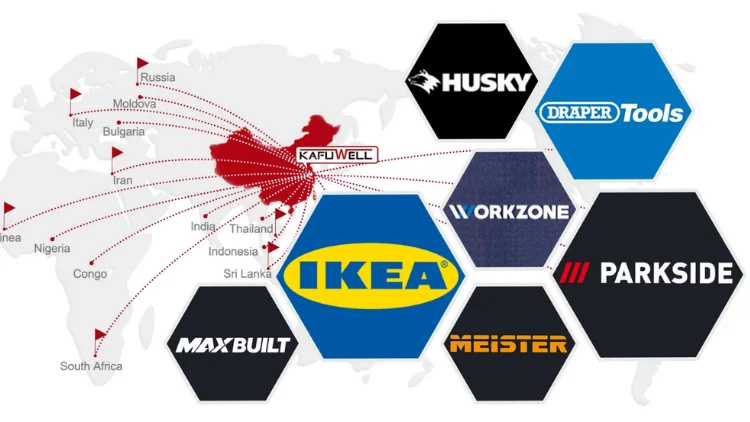
If you are looking for a reliable OEM/ODM partner, KAFUWELL is your trusted choice. Get in touch with us to explore new opportunities and build a more competitive future together.