When choosing between OEM and ODM manufacturing, this decision will shape your brand’s future. If you’ve ever wondered what these terms mean or want to know which approach fits your business goals, this article explains what OEM and ODM are, how each affects your costs, speed, customization, intellectual property, and quality, and offers advice to help you choose the best option for your company.
OEM vs ODM: What Do These Terms Really Mean?
If you’ve browsed factories or manufacturing sites, you’ve probably seen the terms “OEM” and “ODM” everywhere. Here’s what they mean.
What is OEM?
OEM stands for Original Equipment Manufacturer. You might hear it called “white labeling.” In simple terms, a factory already has everything set up: the molds, tooling, and machines needed to make a standard product. All you do is tweak a few surface details. That could be adding your logo, picking a new color, or updating the packaging. The core product stays the same as everyone else’s, and your changes are mostly cosmetic.
What is ODM?
ODM stands for Original Design Manufacturer. This path means making something totally new. There’s no existing equipment for your idea. You’ll need to work with the factory to create brand new molds, tooling, and product plans from scratch. This option gives you control over everything from the way your product looks to how it works.
OEM vs ODM Comparison
| project | OEM(Original Equipment Manufacturer) | ODM(Original Design Manufacturer) |
| Product | Uses factory’s existing product design | Entirely new product, unique to your idea |
| Changes | Logo, packaging, color, finishing | Complete control over design and features |
| Setup | No new molds or major engineering needed | Must create new molds and tooling |
| Speed | Fast | Slower, due to development |
| Cost | Lower startup cost | Higher initial investment |
| IP | Factory owns most rights | You can own all intellectual property |
Let’s go deeper on the key differences so you can decide which one matches your needs.
The Five Key Differences Between OEM and ODM
The choice between OEM and ODM isn’t small. It impacts what you sell, how fast you launch, how much you spend, and even who owns your product idea. Let’s look at the five big areas you should consider.
1. Customization and Design
OEM manufacturing gives you a set of choices that are easy to make but also limited:
- Logo placement: Add your brand’s mark to an existing product
- Color: Select a new color scheme to match your style
- Finishing: Adjust surface details, like matte or gloss finish
- Packaging: Change the way it’s boxed or presented
This approach is popular with brands that want to expand their e-commerce stores fast. If you need more SKUs to offer your customers but don’t want to spend months designing new things, OEM works well.
ODM manufacturing, in contrast, frees you to create something brand new:
- Design the shape, size, and functions from scratch
- Choose every detail, inside and out
- Build a product no one else offers
If you have a unique idea and want every detail to reflect your vision, ODM puts you in the driver’s seat.
2. Intellectual Property (IP) Ownership
In the OEM model, intellectual property is primarily owned by the factory. The factory has already developed the molds and design, and you are simply rebranding the product. You cannot claim exclusive rights, and other clients may also purchase the same product.
Going ODM puts the design, molds, and engineering in your hands. That makes it possible to own the IP. While other companies could still buy your finished product, examine it, and reverse engineer it, owning the original factory setup makes it much harder for them to match you quickly. Plus, you have legal recourse if someone copies your protected design.
3. Speed to Market and Product Lifecycle
OEM is the shortcut to rapid market entry. Since the factory already has production ready, all you need to do is change the logo or packaging, and the product can go to market. Launch can happen within a few weeks. This approach is especially suitable for marketing-driven companies and new brands that want to quickly go live, test market reactions, and identify which products are most popular.
ODM, on the other hand, has a much longer development cycle. From design and prototyping to mold development and testing, the process is slower up front. However, the products you create are original and unique, with a typical lifecycle that’s 2–3 times longer than OEM products. ODM items are also much harder for other sellers to copy or “piggyback” on platforms, offering greater profit margins.
Many brands use OEM to test for best-sellers first, then switch to ODM to build their core products. This way, they can earn their “first pot of gold” with OEM and use ODM to establish product and IP barriers in the long run.
4. Cost Structure and MOQ Requirements
OEM: Low Upfront Cost, Ideal for Market Testing
Under the OEM model, the initial investment is relatively low. You don’t need to bear the costs of mold design or engineering development—only basic expenses such as logo customization and packaging design. This model supports small-batch production, typically starting from a few hundred units.
It’s particularly suitable for startups with limited budgets looking to launch products quickly and test market response with minimal risk.
ODM: High Initial Investment, Long-Term Return
The ODM model requires the brand to cover a one-time engineering development cost (NRE), which includes:
- Concept design
- Engineering development
- Mold fabrication
- Testing and revisions
While the upfront cost is higher, it allows for the creation of exclusive products, giving your brand strong differentiation and long-term competitive advantage.
ODMs generally have higher MOQs. This is partly to offset development costs and partly due to the need for customized production lines. The model is better suited for brands with steady traffic or proven market demand.
5. Product Quality and Consistency
OEM manufacturers usually have large-scale production with stable processes, which keeps product quality consistent. You don’t need to be deeply involved in R&D, so delivery tends to be smooth. However, since product design and materials often follow existing models, it’s best to check samples carefully to judge the design and performance.
With the ODM model, you control everything—from material choice and design to process standards. This gives you full control but also more responsibility. If the design is weak, materials are poorly chosen, or testing falls short, it can affect the final product.
Deciding Which Path Is Right for Your Business
The choice between OEM and ODM comes down to your goals, resources, and appetite for risk.
Ask yourself:
- Do I need to get to market fast or build for the long haul?
- Is my idea so unique that I need full control and IP protection?
- How much can I spend up front?
- Do I care more about owning everything or just growing my product line fast?
- Am I okay with limited changes, or do I want to customize every detail?
OEM is tempting for its speed and simplicity, perfect for businesses looking to expand their catalog without much risk or upfront cost. ODM is the way to go if your goal is to create something new and own your design, with the patience and resources to see it through.
Conclusion: Whether OEM or ODM, We’ve Got You Covered
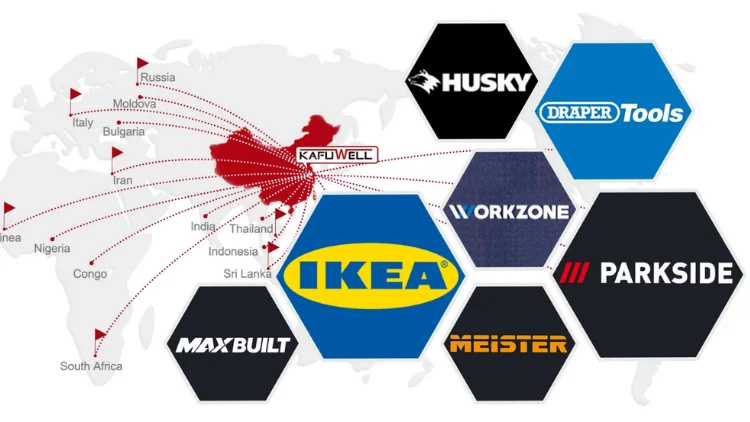
Whether you want to launch products quickly and affordably or build a unique, long-lasting brand, Kafuwell is here to help every step of the way.
As a well-established Chinese manufacturer offering both OEM and ODM services, we combine efficient mass production with a skilled team in R&D, design, and mold development. This lets us handle everything from simple product tweaks to fully original products.
Reach out to us anytime. We’ll create the best product implementation plan tailored to your brand, budget, and growth stage.