When it comes to changing tires or performing vehicle maintenance, the right impact wrench can quickly loosen tight lug nuts, saving you time and sparing you the physical struggle or embarrassment of insufficient strength.
However, before you purchase an impact wrench, it’s crucial to understand what size wrench suits your vehicle’s lug nuts. This guide explains how to select the appropriate impact wrench size and provides information about lug nut torque.
What Are Lug Nuts?
Lug nuts are critical components that secure wheels to your vehicle, preventing them from loosening while driving. Beyond holding the wheel in place, lug nuts help the vehicle withstand external forces, especially during high-speed driving and braking. Proper lug nuts tightened to the correct torque are essential for driving safety.
Common types of lug nuts include:
- Hex Lug Nuts: Found on most passenger cars and light trucks.
- Ball Seat Lug Nuts: Common on high-performance or European vehicles requiring greater fastening strength.
- Flat Seat Lug Nuts: Typically used on heavy-duty trucks and specialized commercial vehicles.
Common Lug Nut Sizes and Torque Recommendations
Lug nut sizes are usually defined by the diameter and thread pitch of the nut. The most common sizes are M12, M14, and M16, where the number indicates the diameter of the lug nut in millimeters.
- M12 (12mm) lug nuts are most often found on small cars, such as many Honda and Toyota models. The recommended torque for tightening these lug nuts typically falls between 80 and 110 Nm (59–81 ft-lb).
- M14 (14mm) lug nuts are used on most SUVs and some light trucks. For these, the usual recommended torque is between 110 and 140 Nm (81–103 ft-lb).
- M16 (16mm) lug nuts are common on large trucks and heavy-duty vehicles. The recommended torque generally ranges from 140 to 180 Nm (103–133 ft-lb).
When choosing an impact wrench, understanding your vehicle’s lug nut size is essential. However, the ideal torque may vary depending on your specific vehicle, the wheel design, and the manufacturer’s guidelines. Always check your vehicle owner’s manual or the manufacturer’s specifications for the most accurate torque recommendation.
Lug Nut Materials
The material of your lug nuts also affects their durability and the torque required. Common materials include steel, aluminum alloy, and special high-strength alloys. Generally, harder lug nut materials will need higher torque and a more powerful impact wrench.
Common Impact Wrench Sizes and Their Applications
When choosing an impact wrench, one of the most important factors is making sure it matches your vehicle and the size of your lug nuts. Impact wrenches are usually classified by the size of their drive end. Here are the most common sizes, their typical torque ranges, and where they’re most often used:
- 1/4-inch impact wrenches are designed for very small fasteners, with a torque range usually between 27 and 200 Nm. These are best for motorcycles, ATVs, or small four-wheel vehicles—not for standard passenger cars.
- 3/8-inch impact wrenches generally offer a torque range of 68 to 270 Nm. This makes them a good fit for compact cars and light trucks, handling routine wheel maintenance with ease.
- 1/2-inch impact wrenches are the most popular choice for automotive work. With a torque range of 270 to 810 Nm, these tools are suitable for most cars, SUVs, and light-duty trucks. They provide plenty of power while remaining easy to handle, making them ideal for both home mechanics and professionals.
- 3/4-inch impact wrenches deliver torque in the range of 810 to 1350 Nm. These are typically used for larger trucks, full-size SUVs, and commercial vehicles, where higher torque is necessary for bigger wheels and nuts.
- 1-inch impact wrenches are for the toughest jobs, providing torque outputs above 1350 Nm, and sometimes well over 2000 Nm. These tools are the go-to for heavy trucks, trailers, and industrial equipment, where extremely high torque is needed.
Choosing the right size impact wrench depends not just on your vehicle type, but also on the size of your lug nuts and the specific torque required for your application.
Recommended Impact Wrench Size for Lug Nuts
For most home mechanics and DIY vehicle maintenance, a 1/2-inch impact wrench is the ideal choice. It’s versatile enough to handle everything from compact cars to light trucks, providing sufficient torque even if your lug nuts are rusted. Additionally, the 1/2-inch drive supports numerous socket sizes and is comfortable for general use.
If you regularly handle larger trucks or commercial vehicles, you should opt for a 3/4-inch or 1-inch impact wrench, providing greater torque suitable for heavier wheels and lug nuts.
Selecting the correct impact wrench ensures efficient lug nut changes and avoids risks associated with incorrect torque settings.
Read more: What Is the Best Power Tool Brand?
What Happens If You Choose the Wrong Impact Wrench Size?
Using an impact wrench that’s too small may leave you unable to loosen or adequately tighten lug nuts. Conversely, using an overly powerful wrench may result in excessive torque, potentially damaging lug nuts or wheel hubs, or causing nut deformation.
Proper Steps for Removing and Installing Wheel Lug Nuts
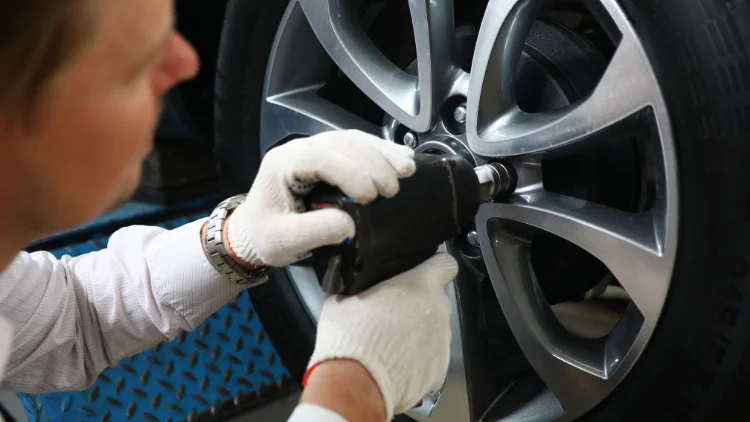
When removing or installing wheel lug nuts, always use an impact wrench with a variable speed trigger. This feature lets you control the tool’s power output—just like controlling the speed of a car with the gas pedal. It’s also essential to use dedicated impact sockets, not regular hand sockets. Impact sockets are thicker and stronger, so they are much less likely to crack or damage your lug nuts under force.
Here are the step-by-step instructions for removing and installing wheel lug nuts:
Removing Wheel Lug Nuts
Before loosening any nuts, check the direction setting on your impact wrench. Make sure the tool is set to “Reverse.” Look for the “R” marking to confirm.
Start slowly with the variable trigger, gradually increasing the power until the nut begins to loosen. Avoid using maximum power unless it’s absolutely necessary.
Loosen each lug nut by about one turn—do not remove them all at once. After all the nuts are loose and the wheel is no longer tightly secured, remove the last one or two nuts by hand to prevent the wheel from suddenly falling and causing injury.
Installing Wheel Lug Nuts
Before tightening with the impact wrench, always start threading each nut by hand for a few turns to avoid cross-threading. Cross-threading can damage both the lug nuts and the wheel studs.
Use the variable trigger to gently snug the lug nuts—set the wrench to the lowest speed if possible and “bump” each nut lightly.
Tighten the nuts in a star pattern, working across the wheel diagonally rather than going around in a circle. This method ensures the wheel sits evenly and prevents it from becoming misaligned.
Once all the nuts are installed, visually check that the wheel is flush with the hub and there are no gaps or misalignment. Each nut should tighten smoothly with no sticking or binding.
Use the Correct Torque Tool
If lug nuts are overtightened, it can cause the studs to stretch or even break, deform the wheel, or damage the nuts themselves. If the nuts are not tight enough, the wheel may gradually loosen while driving, which can cause noise, vibration, or even the wheel coming off—a serious safety risk.
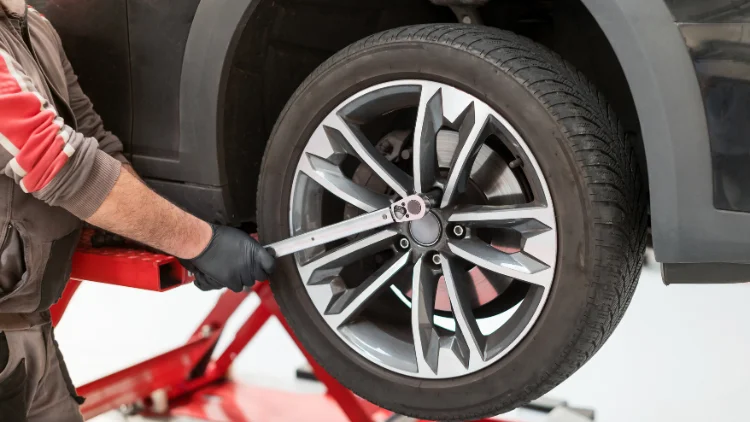
That’s why it’s absolutely essential to use a torque tool to calibrate the final torque on your lug nuts. This point cannot be emphasized enough. No matter how careful you are, an impact wrench cannot replace the precision of a properly calibrated torque wrench.
If you need to change tires quickly and efficiency is your top priority, a torque stick can be a useful and practical tool. However, it’s best to also check with a torque wrench afterward. In professional or standardized environments, always finish by checking with a torque wrench.
Frequently Asked Questions
My Impact Wrench Doesn’t Have Adjustable Speeds. What Should I Do?
Practice feathering the trigger or use short bursts to manage torque, avoiding continuous full-power output.
How Do I Ensure Lug Nuts Are Properly Tightened?
Use a calibrated torque wrench set according to your vehicle’s recommended torque. Hand tightening or visual checks alone are unreliable.
What’s The Difference Between An Impact Socket And A Regular Socket?
Impact sockets are thicker, stronger, and usually black-coated. They’re made from alloy steel for durability under impact forces. Regular sockets are thinner, often chrome-coated, and only suitable for hand tools.
What’s Better, Cordless Electric Or Pneumatic Impact Wrenches?
Cordless electric wrenches are portable and ideal for home and mobile repairs. Pneumatic wrenches offer higher torque but require a compressor, making them more suitable for professional workshops.
Can I Use An Impact Wrench For All Automotive Repairs?
No, impact wrenches aren’t recommended for precise tasks like installing spark plugs or components requiring accurate torque control. Use a torque wrench for precision.
What If A Lug Nut Is Rusted Or Stuck?
Apply penetrating lubricant and allow it time to soak, or gently heat the nut area before attempting removal. Avoid prolonged high-impact use to prevent damage.
Conclusion
For most household users and everyday vehicles, a 1/2-inch impact wrench is the best overall choice—practical, versatile, and cost-effective. If you have larger vehicles or commercial applications, consider stepping up to a 3/4-inch or 1-inch model.