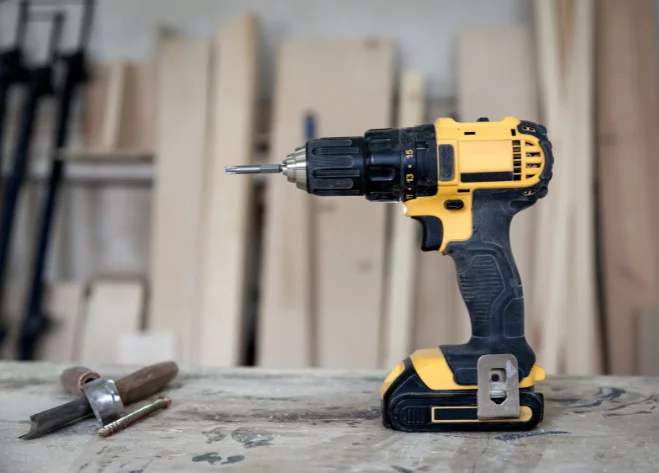
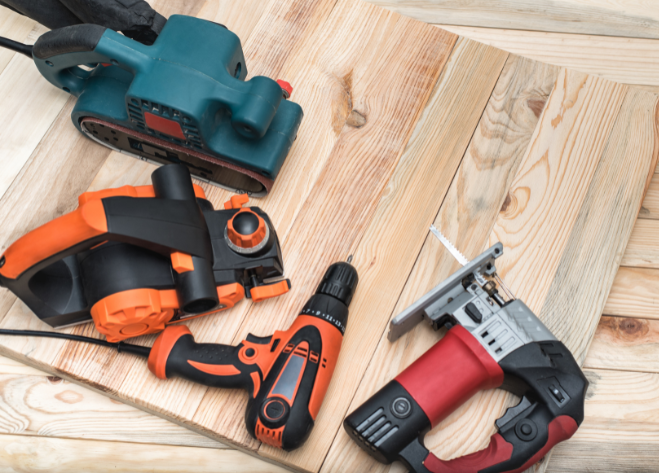
Many distributors run into the same old problem when stocking power tools: the cordless drills on the shelf say 18V on some boxes and 20V on others.The numbers differ by only 2 volts, so which one should you choose?
From an electrical point of view, 18V and 20V are almost the same battery pack. What really matters is the motor, torque, battery platform, and overall product lineup.
1. The Real Difference Behind 18V and 20V
Most of the 18V / 20V cordless tools on the market today use a battery pack made from 5 lithium cells in series. Each cell has two key voltage values:
- Nominal voltage: about 3.6 V
- Maximum voltage when fully charged: a little over 4.0 V
Quick math:
- 3.6 V × 5 cells ≈ 18 V
- 4.0 V × 5 cells ≈ 20 V
So the same battery pack can be labeled as 18V (nominal voltage) or 20V (maximum voltage). Some brands print 18V, others print 20V MAX. In essence, they are choosing different labeling methods for the same pack.
What Matters More Than Voltage
1. Motor Type: Brushless vs Brushed
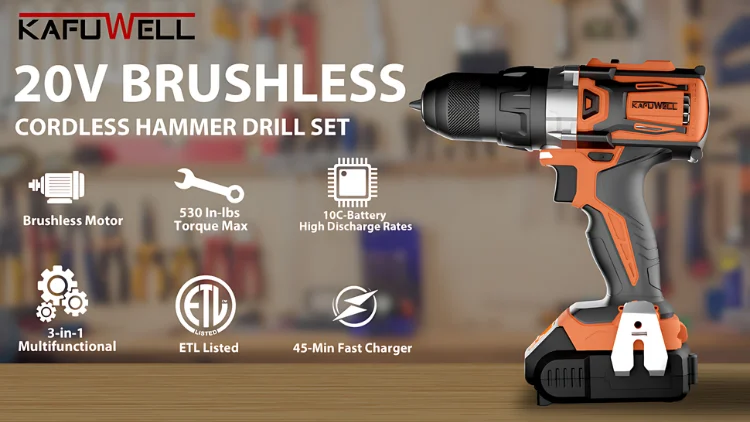
In recent years, many brands have introduced brushless versions for both 18V and 20V platforms. Industry tests consistently show that brushless motors are significantly more efficient, run cooler, and last longer.
Two tools may both say 20V, but the user experience is completely different depending on the motor.
For distributors, motor type should be the first factor when planning product tiers.
2. Battery Capacity and Discharge Rate
Batteries have two key specs:
- Ah capacity: determines how long a single pack lasts
- C-rating (discharge rate): determines whether the tool “chokes” under heavy load
For example, a pack using 10C cells plus a 2.4A fast charger can fully charge a 2.0Ah battery in around 45 minutes—much better for job-site environments where tools run nonstop.
3. Torque, Speed, and Gear Settings
What users truly care about is whether the drill can or cannot drive that screw, and how fast it drills.
Entry-level home use (light duty)
- Torque: ~20–35 N·m
- Speed: 0–400 rpm low / 0–1400 rpm high
- Use cases: DIY, furniture assembly, wood drilling
Mid-range professional (renovation contractors)
- Torque: ~40–55 N·m
- Speed: 0–500 rpm low / 0–1800 rpm high
- Use cases: daily renovation work, metal pieces, self-tapping screws
High-end heavy-duty (construction site)
- Torque: 55 N·m+
- Speed: up to 1800–2000 rpm
- Typically paired with brushless motors and high-capacity packs
4. Battery Platform Ecosystem
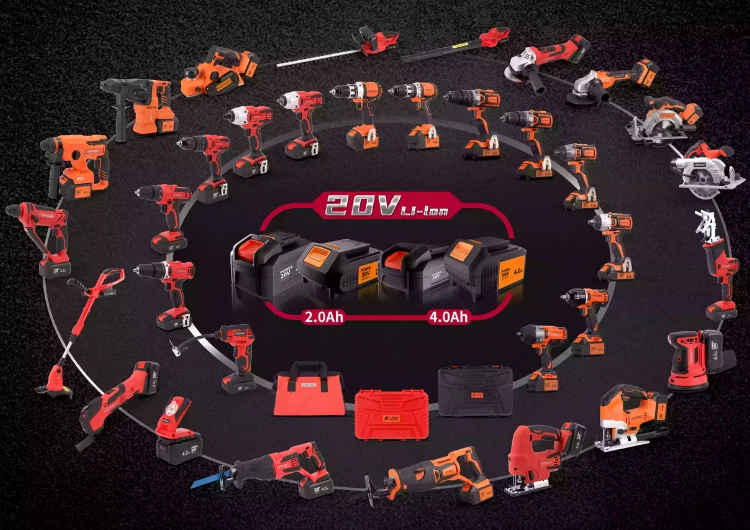
A commonly overlooked factor—yet extremely important for profitability—is platform completeness: how many tools run on the same battery?
Kafuwell’s 18V/20V platform already includes:
- Drills, impact drills, and drivers
- Impact wrenches, angle grinders, circular saws, jigsaws, reciprocating saws, planers, rotary hammers
- Even cordless chainsaws, inflators, and more
For distributors, this matters because:
- A customer who buys an 18V/20V drill often returns to buy an angle grinder or impact wrench
- You only need one battery and charger system in stock
- You can market the platform as “one battery, multiple tools” to increase repeat purchases and customer stickiness
Summary
Although 18V and 20V belong to the same voltage class in terms of electrical design, their labels do not mean the same thing in real-world product planning. “18V” usually stands for a more budget-friendly price point and more basic configurations, while many brands group their brushless models, higher-torque tools, larger battery packs, and wider model ranges under a “20V series.”So distributors should base their choices on tool performance and market positioning rather than just the voltage printed on the box. If you want to build a more suitable product mix, you are welcome to contact our team, and we will suggest the right combinations and solutions based on your market.